
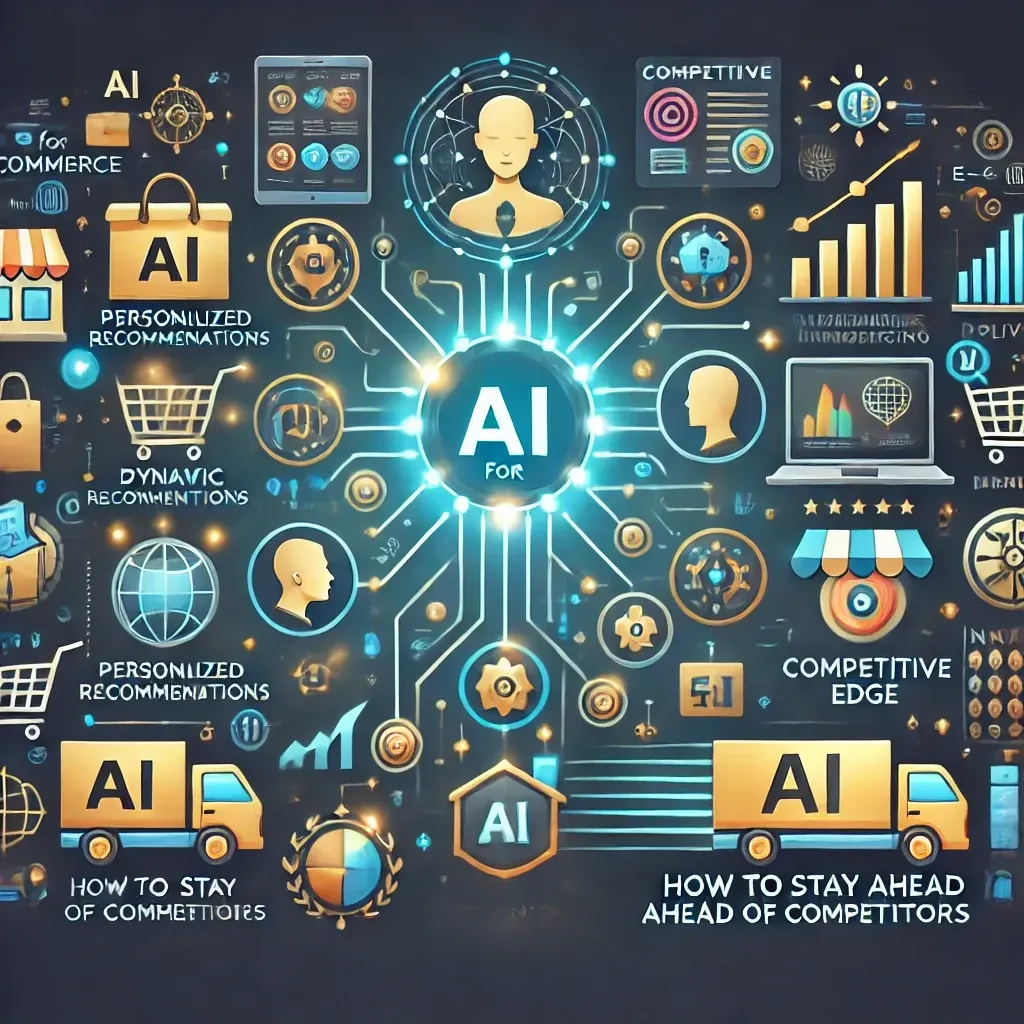
AI for E-commerce: How to Stay Ahead of Competitors
AI for E-commerce: How to Stay Ahead of Competitors
The e-commerce landscape is more competitive than ever.
With rapid technological advancements and evolving customer expectations, staying ahead requires innovative strategies.
Artificial intelligence (AI) has emerged as a game-changer for online retailers, offering tools to enhance personalization, optimize operations, and improve customer experiences.
This blog explores how AI can give your e-commerce business a competitive edge, with practical examples and actionable strategies.

AI for E-commerce: How to Stay Ahead of Competitors
The e-commerce landscape is more competitive than ever. With rapid technological advancements and evolving customer expectations, staying ahead requires innovative strategies. Artificial intelligence (AI) has emerged as a game-changer for online retailers, offering tools to enhance personalization, optimize operations, and improve customer experiences. This blog explores how AI can give your e-commerce business a competitive edge, with practical examples and actionable strategies.
Why AI is Essential for E-commerce
AI empowers e-commerce businesses to:
Improve Customer Experiences: Personalize interactions and provide tailored recommendations.
Optimize Operations: Automate inventory management and streamline logistics.
Boost Conversion Rates: Predict customer behavior and craft targeted marketing campaigns.
AI Strategies to Stay Competitive in E-commerce
1. Personalized Product Recommendations
AI analyzes customer behavior, purchase history, and preferences to suggest products they are likely to buy.
Actionable Insight:
Use AI recommendation engines like Amazon Personalize to deliver tailored suggestions.
Integrate AI-driven product recommendations on landing pages and checkout pages.
Example:
An online fashion retailer implemented AI-powered recommendations, increasing average order value by 25%.
2. AI-Powered Chatbots for Customer Support
Chatbots provide instant responses, handle FAQs, and guide customers through their shopping journey, ensuring a seamless experience.
Actionable Insight:
Deploy chatbots like Tidio or Zendesk AI to assist customers 24/7.
Use natural language processing (NLP) for conversational and context-aware interactions.
Example:
A home decor store used AI chatbots to handle customer queries, reducing support costs by 30%.
3. Dynamic Pricing Models
AI algorithms analyze market trends, competitor pricing, and demand patterns to optimize pricing strategies.
Actionable Insight:
Implement dynamic pricing tools like Prinsync for real-time price adjustments.
Offer personalized discounts based on customer behavior.
Example:
An electronics retailer used AI for dynamic pricing, improving profit margins by 15% during peak seasons.
4. Predictive Analytics for Inventory Management
AI forecasts demand based on historical data, seasonality, and market trends, helping businesses avoid overstocking or understocking.
Actionable Insight:
Use tools like QuickBooks for inventory forecasting.
Integrate predictive analytics into supply chain management to optimize stock levels.
Example:
A grocery delivery service reduced waste by 20% with AI-driven inventory predictions.
5. Visual Search and Image Recognition
AI-powered visual search tools allow customers to upload images and find similar products, enhancing the shopping experience.
Actionable Insight:
Integrate visual search tools like Pinterest Lens into your platform.
Use image recognition to categorize and tag products efficiently.
Example:
An online furniture store implemented visual search, increasing mobile conversions by 18%.
6. AI-Enhanced Marketing Campaigns
AI analyzes customer data to craft targeted email campaigns, social media ads, and content strategies that resonate with specific audiences.
Actionable Insight:
Use Mailchimp for AI-driven email marketing campaigns.
Leverage Google Ads Smart Campaigns to optimize ad performance.
Example:
An e-commerce startup increased ROI on marketing campaigns by 30% using AI-powered ad targeting.
7. Fraud Detection and Prevention
AI detects unusual patterns and suspicious activities, protecting businesses from fraud.
Actionable Insight:
Implement fraud detection tools like Signifyd to monitor transactions.
Use machine learning models to identify and block fraudulent activities.
Example:
An online payment processor reduced chargeback losses by 40% with AI-driven fraud detection.
Challenges in Implementing AI in E-commerce
High Initial Investment: Start with cost-effective AI tools or scalable solutions.
Data Privacy Concerns: Ensure compliance with GDPR, CCPA, and other regulations.
Employee Resistance: Provide training to help teams embrace AI technologies.
Future of AI in E-commerce
Voice Commerce: AI-driven voice assistants like Alexa will redefine the shopping experience.
Hyper-Personalization: Advanced algorithms will deliver even more precise recommendations.
Augmented Reality (AR) Integration: AI-powered AR tools will enable customers to visualize products in their space.
Useful Links for Reference
Conclusion:
AI is revolutionizing e-commerce, enabling businesses to personalize experiences, optimize operations, and stay competitive.
By integrating AI-powered tools and strategies, your online store can enhance customer satisfaction, improve efficiency, and boost profitability.
Embrace these AI trends to future-proof your e-commerce business and gain a competitive edge.
Ready to harness the power of AI?
Book a call today to learn how we can implement these strategies for your business:


