
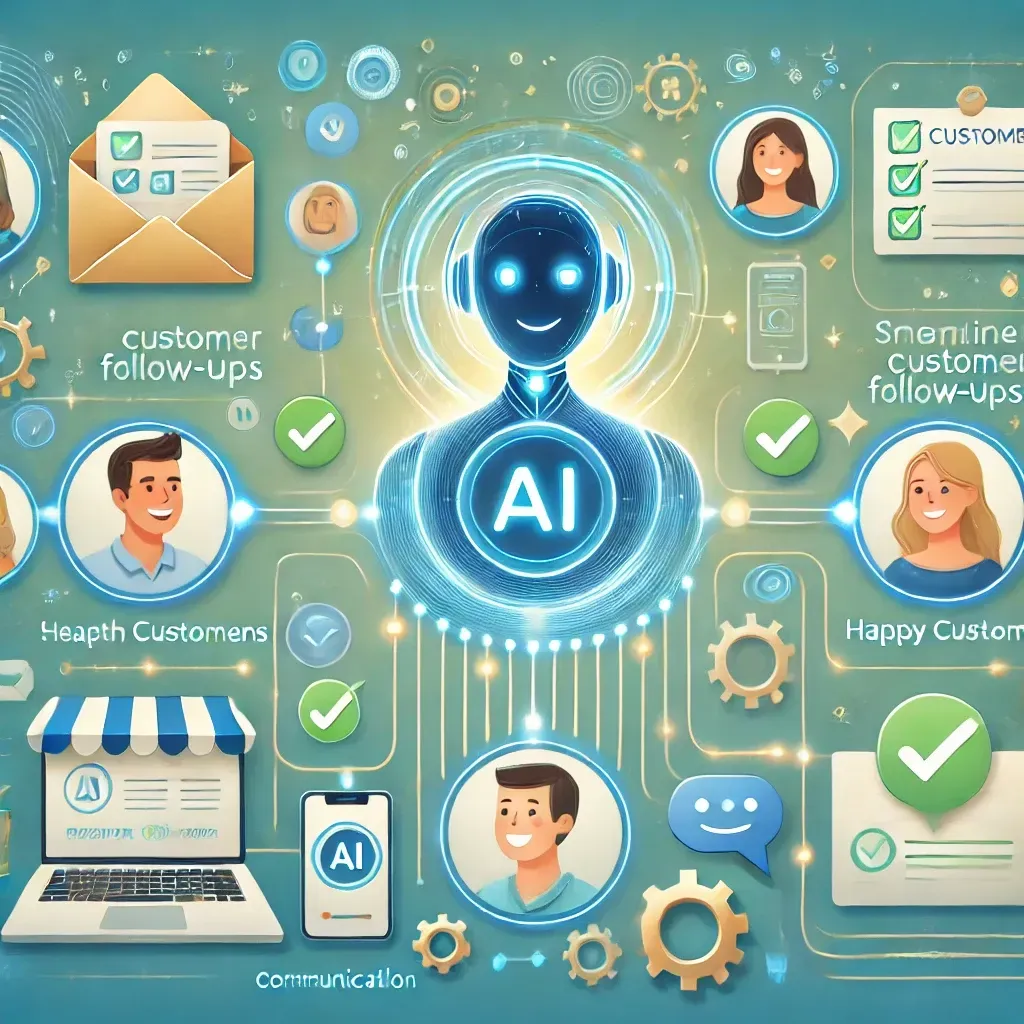
The Role of AI in Streamlining Customer Follow-Ups
The Role of AI in Streamlining Customer Follow-Ups
Following up with customers is a critical component of building long-term relationships and driving conversions.
However, managing follow-ups manually can be time-consuming, error-prone, and costly, especially for small and medium-sized businesses (SMBs) with limited resources.
Enter artificial intelligence (AI)—a game-changer in streamlining customer follow-ups.
This blog explores how AI can transform follow-up processes, save time, and boost customer satisfaction.

Why Customer Follow-Ups Matter
Customer follow-ups are more than just a courtesy; they are essential for maintaining engagement, closing sales, and encouraging repeat business. Studies show that 80% of sales require at least five follow-ups, yet 44% of salespeople give up after one attempt. AI helps bridge this gap by automating, personalizing, and optimizing follow-up strategies.
How AI Streamlines Customer Follow-Ups
1. Automating Routine Follow-Ups
Manually tracking and managing follow-ups can be daunting. AI-driven tools eliminate this challenge by automating routine tasks like sending reminders, follow-up emails, and notifications.
Actionable Insights:
Use AI tools like HubSpot or ActiveCampaign to schedule follow-ups based on customer behavior.
Automate thank-you emails or reminders after key interactions such as purchases, inquiries, or demo requests.
Example:
A pest control business used AI to automate reminders for upcoming service appointments, reducing no-shows by 30%.
2. Personalizing Follow-Up Communication
Generic follow-ups often fail to capture customer interest. AI analyzes customer data to craft personalized messages that resonate with individual preferences.
Actionable Insights:
Use tools like Jasper AI or Persado to generate tailored email content.
Incorporate customer names, recent purchases, or specific interests in follow-up messages.
Example:
An e-commerce store used AI to send personalized product recommendations based on browsing history, resulting in a 20% increase in repeat purchases.
3. Enhancing Lead Nurturing with Predictive Analytics
AI leverages predictive analytics to identify high-priority leads and suggest the optimal time and channel for follow-ups, improving conversion rates.
Actionable Insights:
Implement Salesforce Einstein or Zoho CRM to prioritize leads and automate follow-ups.
Use AI insights to focus on leads with the highest potential for conversion.
Example:
A real estate agency used predictive analytics to follow up with leads most likely to schedule a property tour, boosting appointment rates by 35%.
4. Enabling Multichannel Follow-Ups
Customers engage with businesses across multiple channels, including email, SMS, and social media. AI centralizes and automates follow-ups across these platforms for a seamless experience.
Actionable Insights:
Use tools like Omnisend or Sendinblue to manage multichannel follow-ups.
Set triggers to send follow-ups via SMS or WhatsApp for immediate responses.
Example:
A fitness studio integrated AI to automate class reminders via email and SMS, increasing attendance rates by 25%.
5. Tracking Follow-Up Performance
AI tools provide detailed analytics to measure the effectiveness of follow-up campaigns, enabling businesses to refine strategies continuously.
Actionable Insights:
Use platforms like Tableau or Power BI to analyze open rates, response times, and conversion metrics.
Regularly review performance data to optimize follow-up frequency and messaging.
Example:
A flooring company analyzed follow-up email performance and identified the best times to send reminders, doubling their response rates.
Practical Applications of AI-Driven Follow-Ups
Industries Benefiting from AI in Follow-Ups
Retail: Personalized recommendations to boost repeat sales.
Healthcare: Appointment reminders to reduce no-shows.
Real Estate: Tailored follow-ups for lead nurturing.
Pest Control: Service reminders for recurring customers.
Tools to Get Started
Zendesk: Automates follow-up tickets and customer inquiries.
Drift: AI-powered chatbots for real-time follow-ups.
Calendly: AI-driven scheduling for seamless appointment follow-ups.
Challenges and How to Overcome Them
Over-Automation: Avoid sounding robotic by blending automation with personalization.
Data Privacy: Ensure compliance with regulations like GDPR or CCPA when handling customer data.
Initial Costs: Start with scalable AI solutions tailored to your budget and gradually expand.
Conclusion:
AI is revolutionizing how SMBs approach customer follow-ups, offering tools to automate, personalize, and optimize communication.
By adopting AI, businesses can reduce workload, improve efficiency, and ultimately enhance customer satisfaction and retention.
Ready to harness the power of AI?
Book a call today to learn how we can implement these strategies for your business:


